

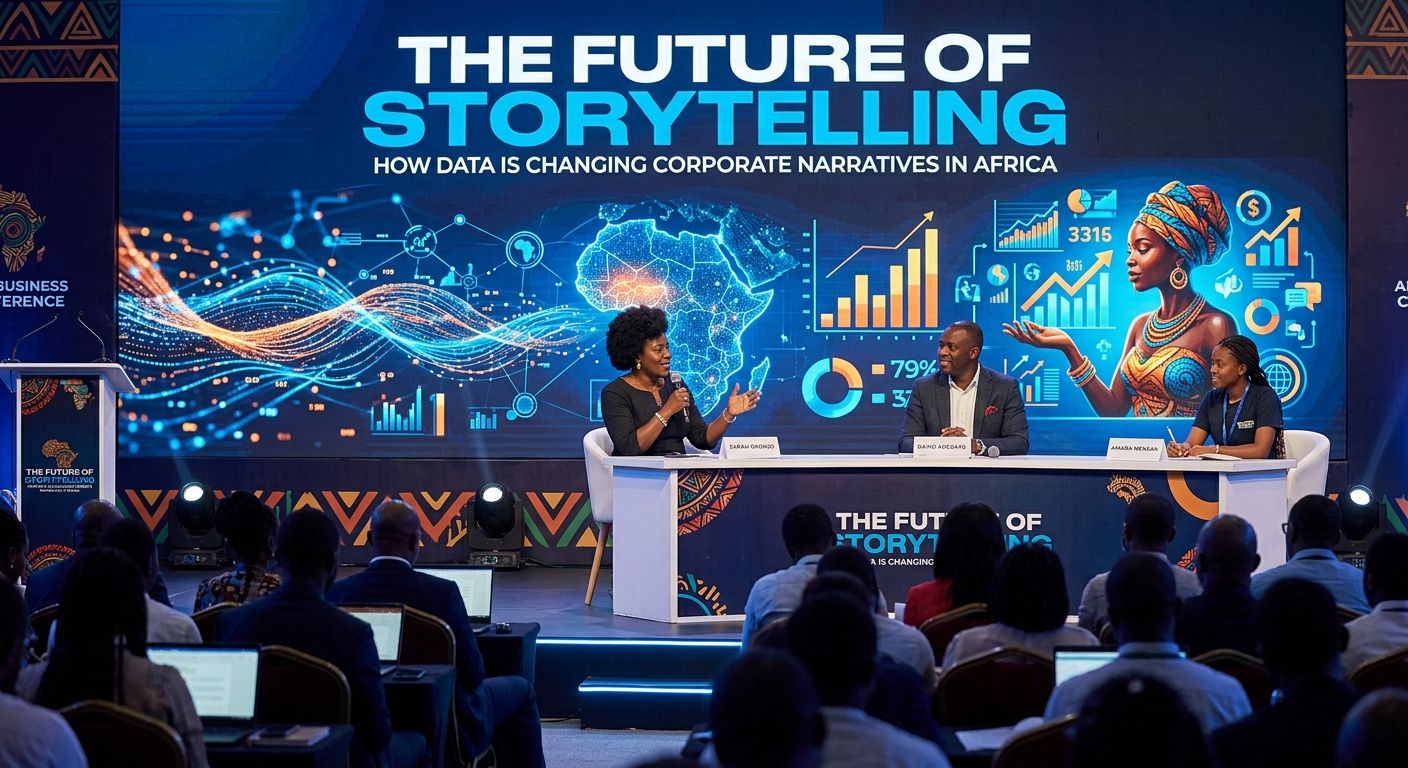
The Future of Storytelling: How Data Is Changing Corporate Narratives in Africa
When Ada joined the communications team of a growing financial services company in Lagos, she inherited a problem. The company had a good story to tell, or so everyone believed.
The leadership team described the organization as customer-focused and innovative. They had Internal presentations that highlighted growth, impact, and transformation. Yet whenever Ada monitored conversations online, she noticed that customers were not talking about innovation but about the slow response times and the fact that certain services still weren’t accessible in some communities.
The story the company was telling, and the story people were living weren’t the same. So, Ada asked: what if the problem wasn’t the storytelling but the story itself?
Come to think of it, for a long time, organizations have more often than not, decided what they wanted people to believe about them and built communication around those messages. Campaigns were designed to reinforce carefully crafted narratives, often based on internal assumptions about customer needs and stakeholder expectations.
And across Africa, businesses are operating in an environment where customers have more information, more platforms, and more chances to share their experiences. Storytelling is becoming less about broadcasting your message and more about understanding what’s actually happening.
Now this is where Data comes in.
When Ada was able to convince her company to run a Customer Satisfaction (CSAT) Study, the findings challenged several long-held assumptions. It made them understand that customers liked the company’s products, but accessibility was a bigger concern than innovation and the service consistency was a bigger concern to be addressed than brand visibility.
Now the research hasn’t weakened the company’s story but it helped improve it.
Instead of telling customers what the company wanted them to hear, the communications team started addressing the issues customers cared about. Their messaging got more specific, relevant, and more credible.
What does this teach us?
Data helps organizations tell better stories.
One common misconception about data-driven communication is that it strips out the human element. But good research often brings organizations closer to the people they serve. Behind every survey’s results are customers experience. Behind every reputation score is a stakeholder’s perception and behind every trend is a human concern, expectation, or frustration.
Research gives organizations access to those realities and Public relations gives them a way to respond. The most effective corporate narratives are only built on what an organization wants to say but by what stakeholders are already experiencing.
Whether it’s a financial institution promoting inclusion, a telecom company discussing connectivity, or a development organization highlighting impact, audiences are asking the same question: can you prove it?
Claims that once stood on their own now need evidence. A statement about customer satisfaction carries more weight when it’s backed by customer insights. A sustainability initiative becomes more credible when it’s backed by measurable outcomes. A reputation campaign gets stronger when it addresses real stakeholder concerns uncovered through research.
Trust is easier to build when the stories are grounded in facts.
Data does more than help organizations understand the present. It also helps them prepare for the future. Through social listening, sentiment analysis, market research, and stakeholder engagement studies, organizations can spot emerging conversations before they turn into major issues, catch shifts in public expectations early and adjust their communication strategies accordingly.
All these results are a more proactive approach to storytelling. Instead of reacting to public conversations, organizations can help shape them.
The future of storytelling isn’t data versus narrative. It’s data informing the narrative. And in a world where trust matters more than ever, that distinction matters.
This alignment between reality and messaging is exactly what we prioritize at Redwood Consulting. We guide organizations in bridging the divide between internal aspirations and your stakeholder expectations.
If your brand’s narrative needs to catch up with what your customers are really experiencing, Reach out to us and let us help you gather insights that will better inform your actions and your messaging.